General Approach
Industrial circulating water treatment follows a four-step coordinated strategy: “Scale Inhibition & Corrosion Protection → Biocide & Algae Control → Water Quality Monitoring → Concentration Management.” By controlling scaling factors, corrosion factors, and microbial growth in circulating water, the system ensures efficient heat exchanger operation, extends equipment service life, and reduces energy consumption and maintenance costs.
Core Technical Routes
① Chemical Scale Inhibition (Phosphorus-Based / Carbon-Based / Polymer): Polyphosphates, organic phosphonates, and polymer dispersants adsorb onto crystal lattice surfaces, preventing calcium carbonate and calcium sulfate scale formation. Applicable to scale inhibition treatment in open recirculating cooling water systems.
② Corrosion Inhibitor Protection (All-Organic / Molybdate-Based / Zinc-Based): Forms protective films on metal surfaces to inhibit electrochemical corrosion. All-organic formulations are environmentally friendly. Molybdate-based inhibitors are suitable for high-temperature operating conditions. Applicable to protection of heat exchangers constructed with carbon steel and copper alloys.
③ Alternating Oxidizing and Non-Oxidizing Biocide Dosing: Oxidizing biocides (sodium hypochlorite, chlorine dioxide) rapidly eliminate bacteria. Non-oxidizing biocides (isothiazolinone, glutaraldehyde) provide sustained microbial suppression and prevent slime adhesion. Applicable to open recirculating cooling tower systems.
④ Side-Stream Filtration + Side-Stream Softening: Side-stream filters remove suspended solids and slime. Side-stream sodium ion exchangers reduce hardness in makeup water. Applicable to circulating water systems with high turbidity source water or requirements for elevated cycles of concentration.
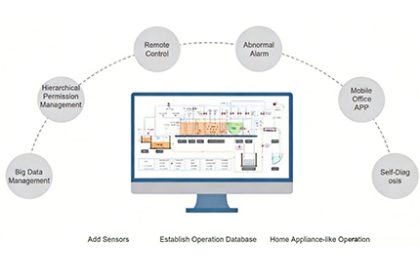
⑤ Online Water Quality Monitoring (Conductivity / pH / ORP / Residual Chlorine / Temperature): Real-time monitoring of cycles of concentration, corrosion rate, and microbial indicators, integrated with automated chemical dosing equipment adjustment. Applicable to large-scale industrial circulating water stations in petrochemical, steel, and power generation industries.
⑥ Side-Stream Softening + Zero Liquid Discharge Technology: Electrochemical scale removal (electrolytic descaling units) or side-stream weak acid resin systems reduce makeup water hardness, enabling operation at high cycles of concentration while minimizing blowdown volume. Applicable to industrial facilities in water-scarce regions or those subject to stringent environmental discharge requirements.
Key Considerations
The core principle of circulating water treatment is the integrated three-pronged approach of “Scale Prevention + Corrosion Prevention + Bacteria and Algae Control.” Chemical dosing should combine continuous feed with intermittent shock dosing strategies. Comprehensive monthly water quality analysis of the cooling water system should be conducted, with scale inhibition and corrosion protection programs promptly adjusted based on analytical results to ensure long-term, safe operation of the circulating water system.