General Approach
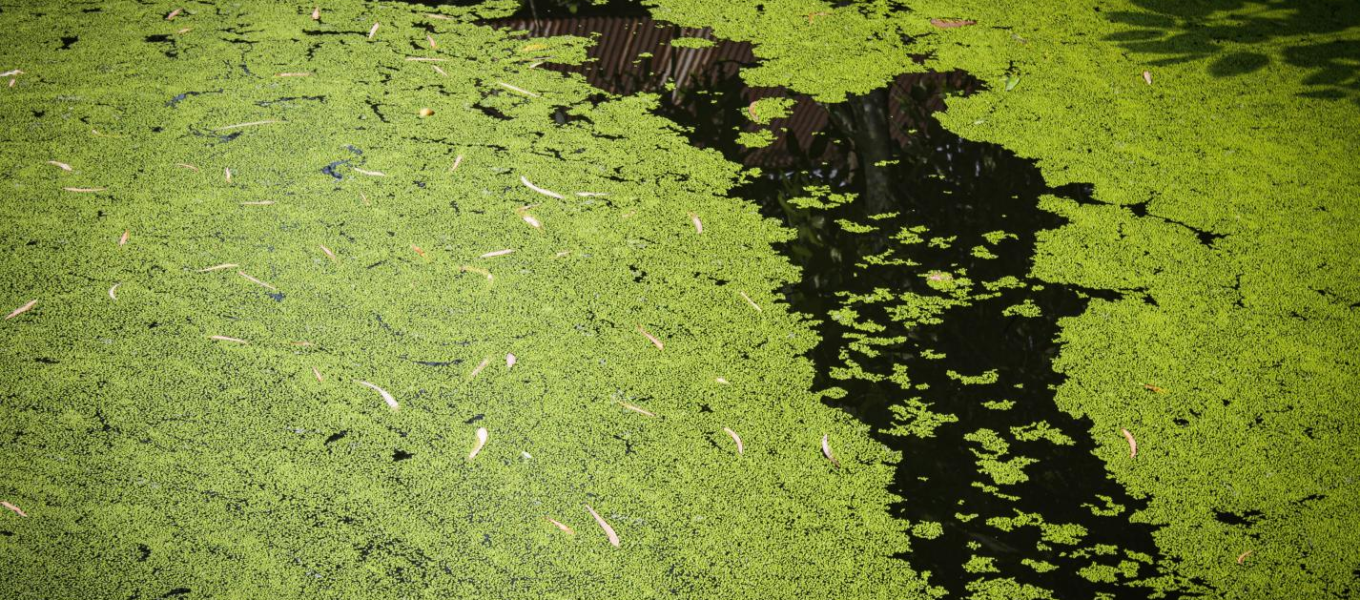
Eutrophication treatment follows a four-stage progressive strategy: “Source Control & Pollution Interception → Internal Load Reduction → Ecological Restoration → Long-Term Management.”
Core Technical Routes
① Constructed Wetlands: Plant uptake + microbial degradation + substrate filtration. Applicable to advanced treatment of low-concentration wastewater and river bypass purification.
② Ecological Floating Islands / Floating Beds: Plant root adsorption of nitrogen and phosphorus + light shading for algae inhibition. Applicable to reservoirs, landscape water bodies, and slow-flowing waters.
③ Aeration & Oxygenation + Microbial Agents: Increase dissolved oxygen → aerobic degradation of organic matter → inhibition of phosphorus release from sediment. Applicable to deep lakes and black-odor water body emergency treatment.
④ Environmental Sediment Dredging: Physical removal of internal nutrient loads. Applicable to water bodies with severe internal pollution and high nitrogen and phosphorus release from sediment.
⑤ Magnetic Coagulation / Chemical Phosphorus Removal: Chemical precipitation for rapid removal of dissolved phosphorus. Applicable to emergency algae control and scenarios with high influent phosphorus concentrations.
Key Considerations
Eutrophication treatment is a long-term systematic endeavor. Reliance on any single technology rarely achieves complete remediation. A comprehensive approach integrating “External Source Control + Internal Load Management + Ecological Restoration” is recommended. Significant ecological improvement typically requires a treatment period of 3 to 5 years to become evident.