Choosing a modular wastewater treatment system is not only about buying equipment. It is about matching wastewater quality, discharge standards, site conditions, operation capacity, and future expansion needs with the right treatment process.
The demand for flexible wastewater infrastructure is increasing. The UN SDG 6 report states that only 56% of global domestic wastewater, about 332 billion m³, was safely treated in 2024. WHO also reported that 42% of household wastewater was not safely treated in 2022, equal to about 113 billion m³ released with inadequate or no treatment. For decentralized projects, the U.S. EPA notes that more than one in five U.S. households use septic or small community cluster systems.
Syneraqua provides modular wastewater treatment systems for industrial, municipal, commercial, and remote-site projects. Buyers can explore Syneraqua’s Water & Wastewater Treatment Systems, Industrial Wastewater Treatment Solutions, and Contact Syneraqua for project-specific support.
Define the Wastewater Source and Treatment Target
The first step in choosing a modular wastewater treatment system is to identify the wastewater source, pollutant profile, flow rate, and required discharge or reuse standard.
Different wastewater sources require different process routes. Domestic sewage usually focuses on BOD, COD, suspended solids, ammonia nitrogen, phosphorus, pathogens, odor, and sludge. Industrial wastewater may contain oil, heavy metals, high salinity, solvents, color, toxic compounds, or large pH fluctuations.
Before requesting a proposal, buyers should prepare wastewater analysis, daily and peak flow rate, operating hours, discharge standard, reuse target, site layout, power supply, and space limitations. Without these inputs, a quotation may look attractive but fail in real operation.
A good modular wastewater treatment system should be designed around the target result. For example, a hotel may need compact sewage treatment and reuse for irrigation, while a factory may need COD reduction, heavy metal removal, or advanced polishing before discharge.
Compare Treatment Processes and System Configuration
Treatment process selection determines whether a modular wastewater system can remove the required pollutants reliably under real operating conditions.
Common process stages include screening, equalization, physicochemical treatment, biological treatment, membrane filtration, disinfection, sludge handling, and automation control. The right combination depends on wastewater quality and compliance requirements.
| Wastewater Type | Key Pollutants | Recommended Modular Process |
|---|---|---|
| Domestic sewage | BOD, COD, TSS, ammonia, pathogens | Screening + biological treatment + disinfection |
| Food wastewater | Oil, COD, suspended solids | Oil separation + DAF/coagulation + biological treatment |
| Textile wastewater | Color, COD, chemicals | Coagulation + oxidation + biological/advanced treatment |
| Metal processing wastewater | Heavy metals, pH, suspended solids | pH adjustment + precipitation + filtration |
| High-salinity wastewater | Salts, COD, conductivity | Pretreatment + membrane concentration or polishing |
| Reuse water | Fine solids, microbes, odor | Filtration + UF/RO + disinfection |
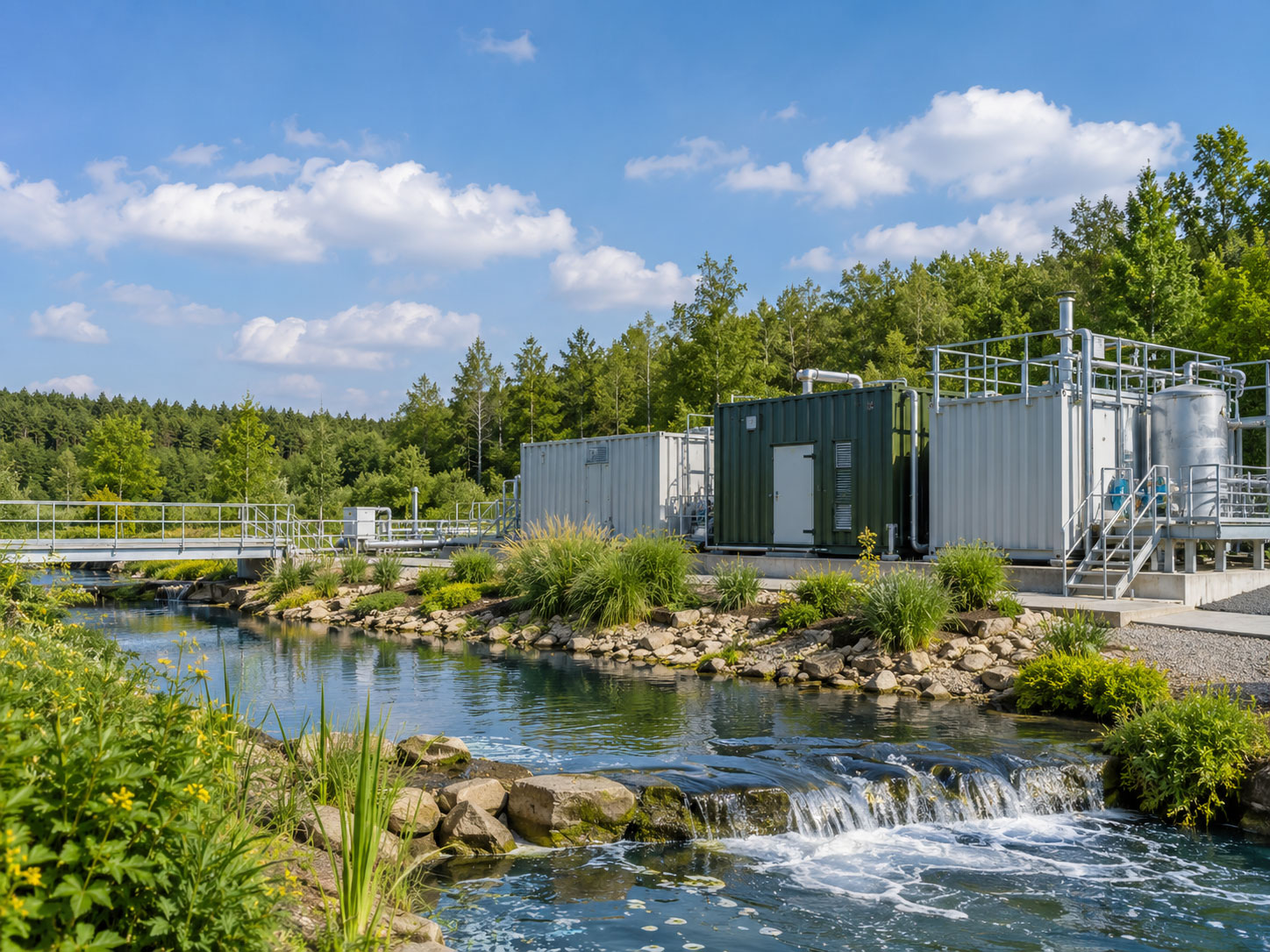
Containerized systems are suitable for outdoor, remote, temporary, and mobile projects. Skid-mounted systems are better for existing plant rooms or factories that need easy maintenance access. Syneraqua can also design hybrid systems when buyers need compact integration, transport protection, and flexible future expansion.
Evaluate Cost, Operation and Lifecycle Value
Modular wastewater treatment system cost depends on capacity, influent quality, effluent standard, process complexity, materials, automation level, installation conditions, and long-term operation needs.
The same 100 m³/day capacity can have very different prices. Treating domestic sewage is usually simpler than treating industrial wastewater with heavy metals, oil, high COD, or high salinity. Buyers should therefore avoid comparing systems only by flow rate.
Capital cost includes equipment, tanks, pumps, membranes, dosing units, control panels, container or skid structure, transport, installation, and commissioning. Operating cost includes power, chemicals, membrane replacement, sludge disposal, spare parts, labor, and maintenance.
A lower initial price may become expensive if the system requires frequent manual operation, produces excessive sludge, consumes too many chemicals, or fails to meet discharge standards. The better choice is a system that delivers stable compliance with manageable lifecycle cost.
Check Supplier Capability and Project Support
A reliable modular wastewater treatment supplier should provide process design, equipment integration, quality manufacturing, commissioning support, and long-term technical service.
A good supplier should not only sell a standard unit. It should review wastewater test data, select the right process, explain cost drivers, provide equipment layout, define operation requirements, and support commissioning. This is especially important for industrial wastewater, where pollutant changes can affect treatment performance.
Buyers should ask whether the supplier can provide process customization, modular manufacturing, automation control, remote monitoring options, spare parts, operator training, and after-sales service. Syneraqua supports modular wastewater projects from process design and equipment integration to installation guidance, commissioning, and operation support.
Conclusion
The best modular wastewater treatment system is the one that meets the required discharge or reuse standard with the right balance of reliability, cost, scalability, and site adaptability.
To choose the right system, buyers should define wastewater quality, flow rate, treatment target, site conditions, and operation expectations before comparing equipment. With accurate project data, Syneraqua can recommend a modular wastewater treatment system that supports stable compliance, easier installation, and future expansion.
FAQ
1. What is a modular wastewater treatment system?
It is a prefabricated wastewater treatment solution that integrates equipment, piping, controls, and process units into skid-mounted or containerized modules for fast installation and flexible operation.
2. What information is needed before choosing a system?
Buyers should provide wastewater analysis, daily flow rate, peak flow, discharge or reuse standard, site layout, power conditions, installation environment, and expected delivery schedule.
3. Is modular treatment suitable for industrial wastewater?
Yes. Modular systems can treat industrial wastewater from food, textile, chemical, electronics, metal processing, mining, pharmaceutical, and industrial park projects when the process is properly designed.
4. What affects the cost most?
The main cost factors are capacity, pollutant concentration, effluent standard, process complexity, automation level, material selection, sludge treatment, installation conditions, and operation cost.
5. Should I choose containerized or skid-mounted design?
Choose containerized design for outdoor, remote, mobile, or temporary projects. Choose skid-mounted design for existing buildings, factories, and sites that need easier inspection and maintenance.
6. Can the system be expanded later?
Yes. Modular wastewater treatment systems can be expanded by adding modules when wastewater volume increases, discharge standards become stricter, or reuse demand grows.
