General Approach
Industrial wastewater treatment for discharge compliance follows a full-process control strategy: “Segregated Collection → Pretreatment → Main Treatment → Advanced Treatment → Online Monitoring.” Based on the specific characteristics of different industrial effluents—such as high salinity, high organic content, heavy metals, and acidic or alkaline conditions—appropriate process combinations are selected to ensure stable effluent compliance with national or industry-specific discharge standards.
Core Technical Routes
① Segregated Collection + Flow Equalization & Homogenization: Wastewater is collected separately based on pollutant characteristics—acidic versus alkaline, high versus low concentration, and heavy metal content. Equalization basins balance flow and water quality while reducing shock loads. Applicable to industrial parks or comprehensive industrial facilities with multiple discharge points and significant water quality fluctuations.
② Physicochemical Pretreatment (Coagulation Sedimentation / Air Flotation / Fenton Oxidation): Coagulation sedimentation removes SS and partial COD. Air flotation separates emulsified oils. Fenton oxidation degrades recalcitrant organic compounds. Applicable to pretreatment of high-concentration organic wastewater from chemical, pharmaceutical, textile dyeing, and electroplating industries.
③ Biological Treatment (Anaerobic + Aerobic Combination): Hydrolytic acidification improves wastewater biodegradability. UASB and IC anaerobic reactors degrade high-concentration organic matter. MBR and A/O processes provide advanced treatment. Applicable to high-concentration organic industrial wastewater from brewing, papermaking, and food processing sectors.
④ Membrane Separation Technology (MBR / UF / RO / NF): Ultrafiltration retains suspended solids. Reverse osmosis and nanofiltration separate dissolved salts and recalcitrant substances. Applicable to zero liquid discharge for high-salinity wastewater, electroplating wastewater reuse, and advanced pharmaceutical wastewater treatment.
⑤ Specialized Heavy Metal Treatment (Chemical Precipitation / Ion Exchange / Electrolysis): Hydroxide precipitation removes heavy metal ions. Ion exchange resins selectively recover valuable metals. Electrolysis treats chromium and copper-containing wastewater. Applicable to wastewater from electroplating, metallurgy, mining, and electronics industries.
⑥ Evaporation & Crystallization for Zero Liquid Discharge (MVR / Multi-Effect Evaporation): Mechanical vapor recompression circulates and concentrates steam. Crystallized salts are transported off-site for disposal. Condensate is reused. Applicable to zero liquid discharge projects for high-salinity, high-COD wastewater.
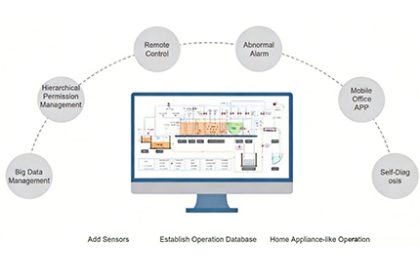
⑦ Online Monitoring + Data Upload: Real-time monitoring of parameters including flow rate, COD, ammonia nitrogen, total phosphorus, and heavy metals. Data is uploaded in real time to environmental protection monitoring platforms. Applicable to key discharge permit facilities and influent monitoring at centralized industrial park wastewater treatment plants.
Key Considerations
The core principles of industrial wastewater treatment are “Source Segregation + Process Controllability + End-of-Pipe Compliance.” It is recommended to install online water quality instruments at discharge nodes and establish early warning response mechanisms to achieve segregated collection and separate treatment by waste stream type.
Process selection should be based on wastewater quality reports, with design parameters confirmed through bench-scale or pilot testing to avoid ineffective treatment resulting from indiscriminate application of standardized approaches.