What is Packaged Water Purification System
Our skid-mounted water purification systems integrate three core technologies—magnetic flocculation with high-gradient magnetic separation, rotary drum microfiltration with biological aerated filter (BAF) advanced degradation, and circulating filtration with precision purification—to address high-turbidity pollution, eutrophication, and circulating water treatment needs across landscape, recreational, and industrial cooling applications. Factory pre-commissioned within standard containers or steel frames, each unit delivers plug-and-play deployment, minimal civil works, and unattended 24/7 automated operation, providing an ideal solution for emergency response, long-term eutrophication control, and sustainable water quality management.
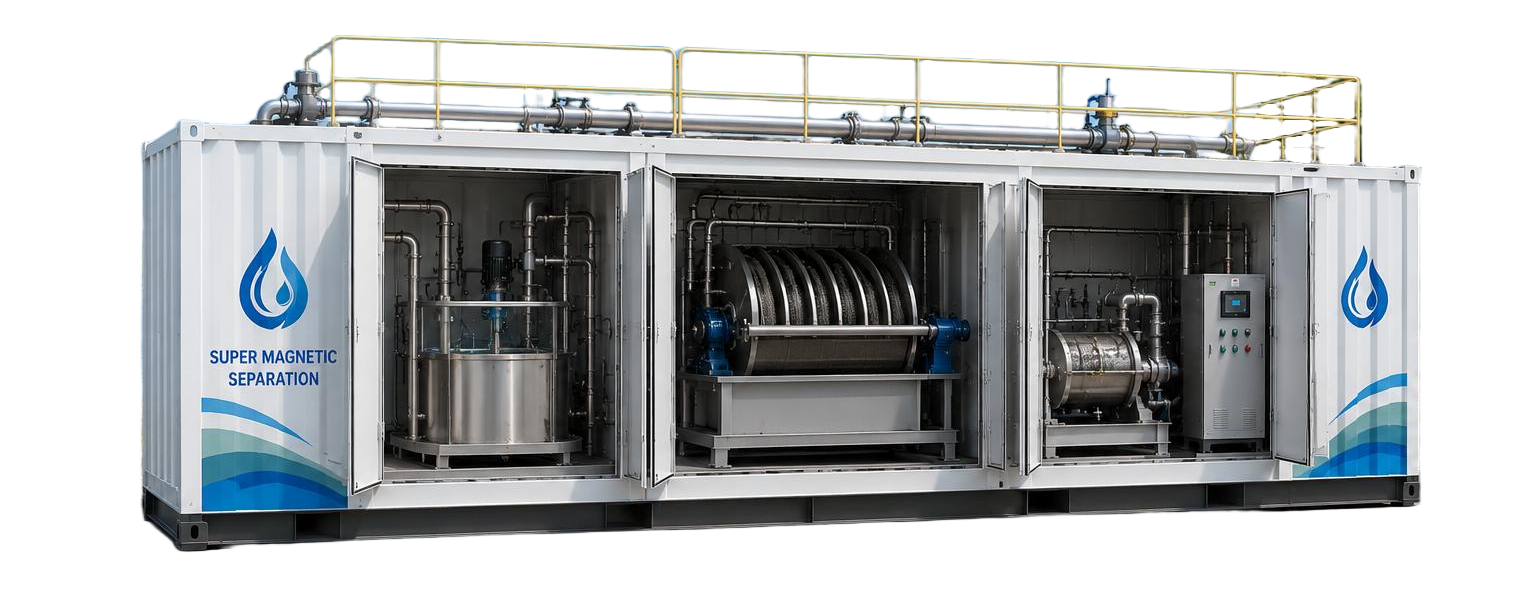
Containerized HGMF (High-Gradient Magnetic Field) Separation Water Purification System Introduction
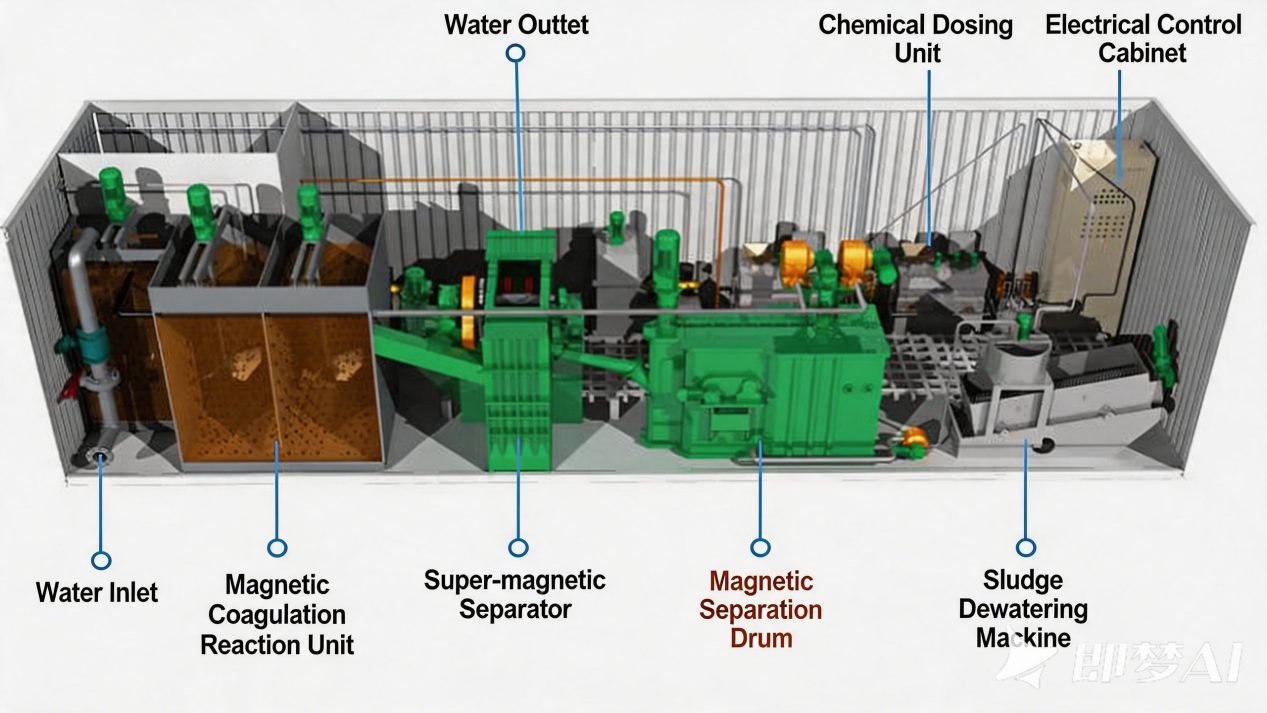
Designed for high-turbidity, high-suspended-solids, and sudden pollution events, this pre-assembled, plug-and-play treatment system combines magnetic flocculation with high-gradient magnetic carrier separation. Magnetic powder, coagulants, and flocculant aids bind pollutants into magnetic flocs, which are then captured by the high-intensity magnetic field of the separator for solid-liquid separation and water clarification. The separated magnetic media is recovered via a magnetic drum for reuse. Fully containerized and factory pre-commissioned, the system enables rapid deployment, mobile emergency response, continuous operation, and high-clarity effluent, making it ideal for emergency pollution control and complex water purification projects.
Containerized HGMF Separation Water Purification System Details
This system integrates three core capabilities—rapid sedimentation, high-efficiency separation, and emergency response—to deliver the following:
- Fast removal of suspended solids (SS)
- High-efficiency reduction of turbidity and color
- Enhanced removal of algae and colloidal pollutants
- Simultaneous removal of partial COD and total phosphorus (TP)
- Rapid water clarification for emergency scenarios
- Efficient sludge thickening and media recovery
- Continuous, stable system operation

- Magnetic Coagulation Reaction Unit:The total HRT of the magnetic mixing reaction tank is 1.5–2.5 min, with a mixing velocity gradient (G value) no less than 300 s⁻¹. The total HRT of the magnetic flocculation reaction tank is no less than 3 min, with a mixing velocity gradient (G value) no higher than 200 s⁻¹.
- Magnetic Disc Separation Unit:The disc diameter is typically 1500 mm. The solid-liquid separation time is less than 30 seconds. The magnetic induction intensity on the disc surface is no less than 1500 Gs. Polyurethane wear-resistant material is used for the scraper components, with an integrated scraper bar design that enhances wear resistance and sealing performance, further improving effluent quality and ensuring effluent SS < 10 mg/L.
- Magnetic Media Recovery and Recirculation Unit: The magnetic media recovery rate is no less than 95%. The moisture content of the sludge discharged from the magnetic drum is no higher than 98%. The magnetic induction intensity on the drum surface is no less than 3000 Gs. The magnetic media circulation pump should preferably be a wear-resistant, non-clogging type, such as a diaphragm pump.
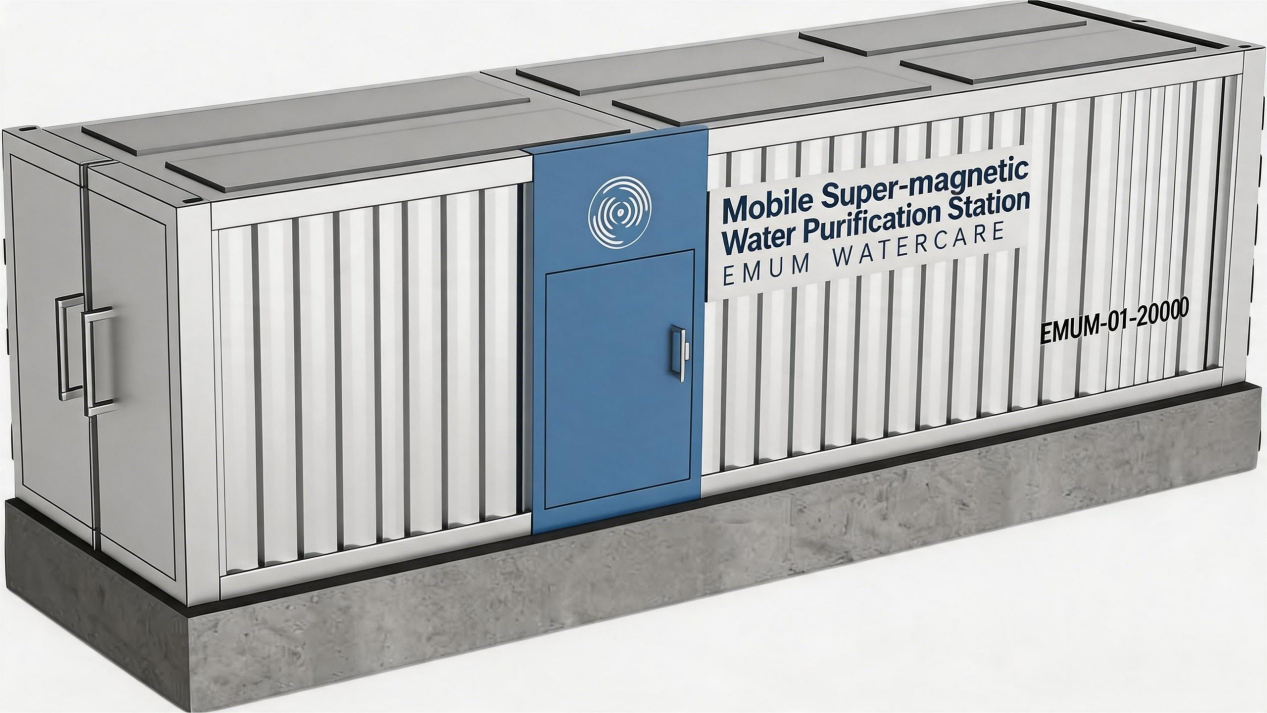
- Small Footprint: Compact structure occupies only 1/6 to 1/8 of the land required by conventional processes, and can be configured as a mobile truck-mounted unit.
- Rapid Startup: Highly automated system with fast startup capability, supporting one-key start/stop operation.
- Short Purification Time: Magnetic disc solid-liquid separation time is less than 30 seconds, with total system treatment time of 4–6 minutes.
- Superior Effluent Quality: Removal rates: SS 90–95%, TP 80–90%, algae ≥95%, COD 40–60%.
- High Sludge Concentration: Discharged sludge moisture content ≤95%, suitable for direct feed to dewatering equipment.
- Low Operating Cost: Low system installed power and energy consumption; magnetic seed recovery rate reaches over 98%.
Advantages:
- Short treatment time: total reaction under 5 minutes with magnetic force over 600 times gravity
- Excellent, stable effluent quality
- High sludge concentration: direct magnetic adsorption and continuous removal
- Low operating costs: minimal chemical dosage, high magnetic seed recycling
- Easy maintenance: no backwashing needed, highly automated
Disadvantages:
- Multiple equipment units required
- High equipment investment
Advantages:
- Simple process
- Minimal equipment, low energy consumption
- Partial removal of ammonia nitrogen
Disadvantages:
- Unstable performance, requires backup treatment measures
- Easily impacted by weather, temperature, algae blooms, and external pollution runoff
- Labor-intensive daily maintenance and harvesting
- Vulnerable to pests, diseases, and biological invasion
- Ineffective in winter due to limited plant growth
- Complex mechanisms with imprecise design parameters and limited long-term operational data
The equipment supports modular expansion design, suitable for water treatment at various scales:
- Single-unit capacity: 600 – 5,000 m³/h
- Parallel multi-module expansion: up to 20,000 m³/d
- Turbidity removal rate: 80% – 99%
- Algae removal rate: ≥ 90%
- COD removal rate: 30% – 70% (depending on influent quality)
Containerized HGMF Separation Water Purification System Application Scenarios
Containerized high-gradient magnetic separation water purification systems are widely used in:
The containerized high-gradient magnetic separation water purification system delivers four core advantages—rapid response, high-efficiency separation, emergency treatment, and modular deployment. Breaking through the efficiency limitations of conventional sedimentation processes, it achieves a technological leap from hour-level settling to second-level separation, making it an essential equipment solution for modern emergency water treatment and high-load water purification projects.
Eutrophic Water Purification Equipment Introduction
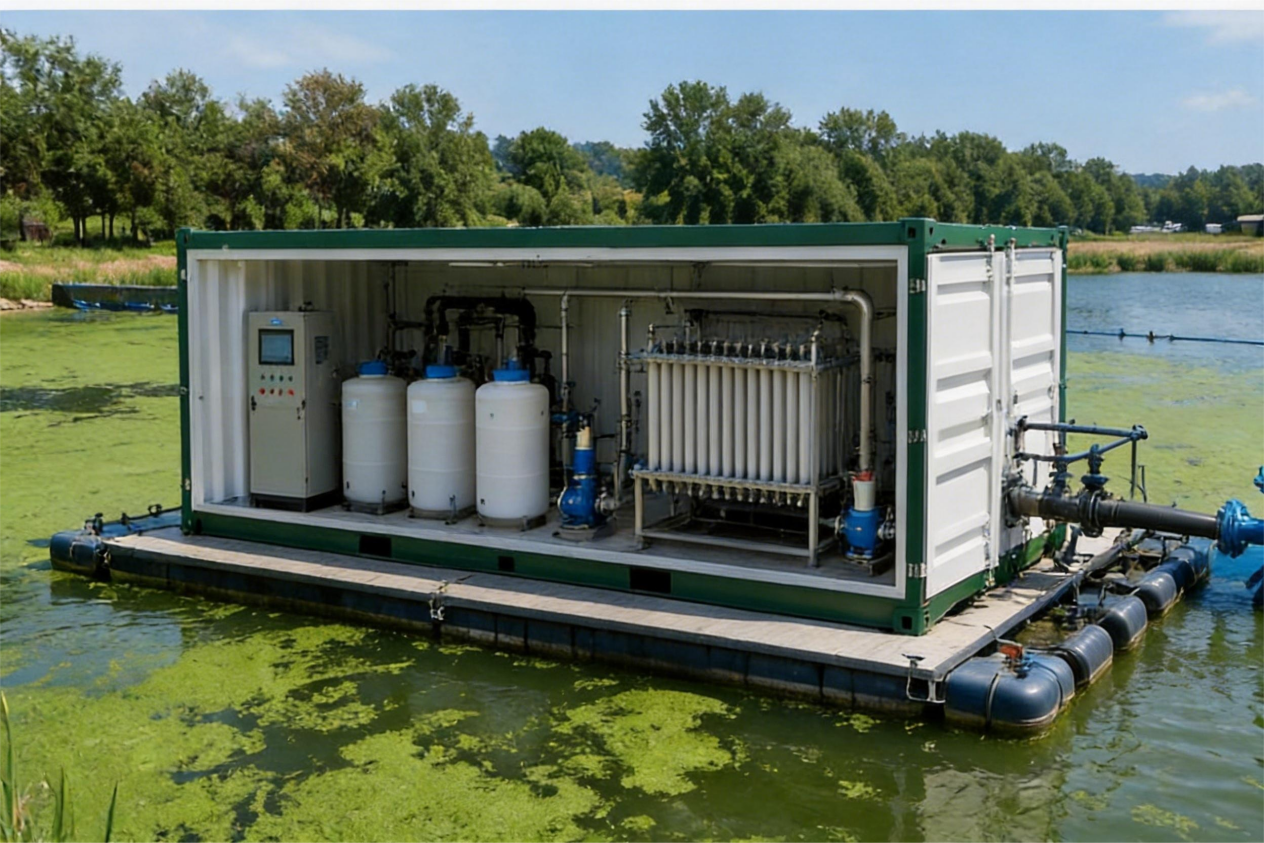
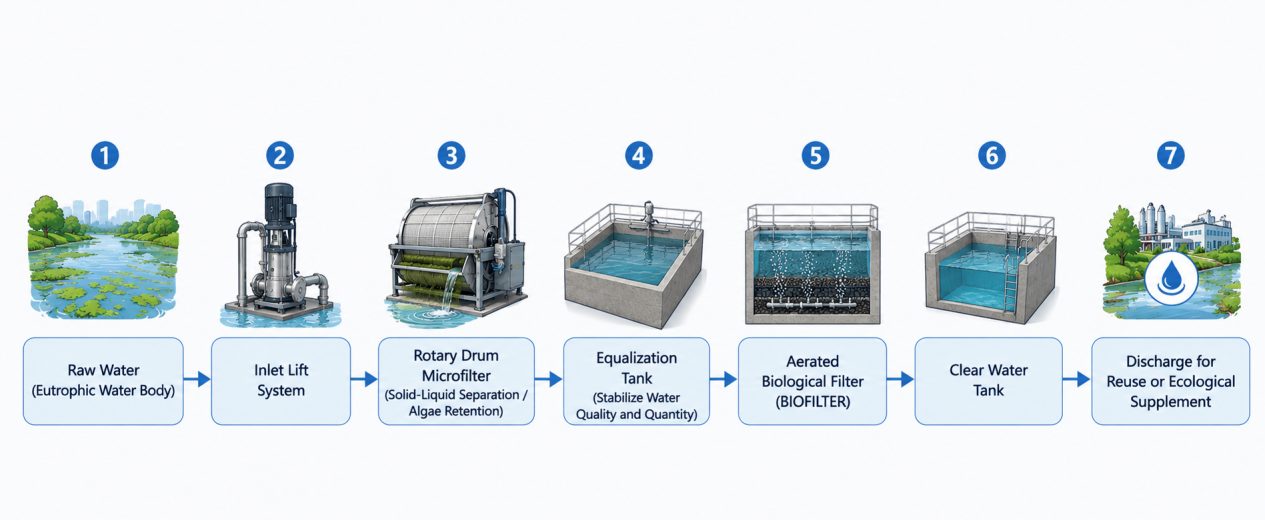
Our company’s independently developed skid-mounted eutrophic water purification equipment employs a core process combining “rotary drum microfiltration pretreatment + aeration biological filter for advanced degradation,” specifically designed to address eutrophication issues in lakes, reservoirs, rivers, landscape water bodies, and aquaculture effluent. The system integrates key treatment units—including physical filtration, biological degradation, and advanced filtration—into standardized containers or steel skids, enabling factory prefabrication, complete unit shipment, and plug-and-play operation on-site, thereby significantly reducing project implementation timelines and civil engineering costs.
This equipment is designed to selectively remove major pollutants such as nitrogen, phosphorus, algae, suspended solids, and organic matter from eutrophic water bodies. The effluent quality consistently meets or exceeds Class IV standards of the “Surface Water Environmental Quality Standard” (GB3838-2002), effectively suppressing cyanobacterial blooms, enhancing water transparency, and restoring the water’s ecological self-purification capacity. Equipped with a fully automated control system, it enables 24-hour unmanned operation with low maintenance costs, making it an ideal solution for both emergency treatment and long-term management of eutrophic water bodies.
Eutrophic Water Purification Equipment Details
This device integrates multiple water treatment functions into a single unit:
- Solid-liquid separation: Utilizing a high-precision rotary drum microfiltration system, it effectively removes over 90% of suspended particulate matter, algae, plankton, and organic debris from the water, maintaining a stable suspended solids concentration below 10 mg/L and significantly reducing the load on subsequent biological treatment units.
- Algal control: Physical filtration retains the majority of algal cells while biologically degrading nutrients released from dead algae, thereby cutting off the nutritional supply for algal growth at its source and effectively suppressing cyanobacterial bloom outbreaks.
- Organic degradation: Heterotrophic microorganisms on biofilms rapidly decompose organic pollutants in water bodies, achieving a COD removal rate of over 70%, effectively reducing organic loads and improving water odor.
- Deamination and phosphorus removal: The aeration biofilter unit employs specialized biological media with surfaces enriched in high concentrations of nitrifying bacteria, denitrifying bacteria, and polyphosphate-accumulating bacteria. Through nitrification-denitrification processes and biological phosphorus removal mechanisms, it achieves efficient removal of ammonia nitrogen, total nitrogen, and total phosphorus, with ammonia nitrogen removal rates exceeding 95% and total phosphorus removal rates exceeding 90%.
- Water quality improvement: After comprehensive treatment, the water transparency significantly increases while chlorophyll a concentration markedly decreases, resulting in clear and transparent effluent that meets requirements for landscape use, ecological water replenishment, and reuse.
- System steady-state maintenance: Long-term preservation of an ecologically balanced aquatic environment.
How It Works
(1) Drum microfiltration stage
The raw water first enters the rotary drum microfiltration system, where it undergoes physical screening through a high-precision filter screen to effectively retain target particles.
- Algal aggregates
- suspended particulate matter
- organic detritus
- colloidal substance
Achieve rapid burden reduction and lower the pollution load on the backend biochemical system.
(2) Aeration Biofilter Stage (Core Unit)
The pretreated water enters the aeration biofilter, where a high-density biofilm forms in the packing layer. Continuous aeration ensures:
- Oxidative decomposition of organic matter under aerobic conditions
- Ammonia nitrogen → Nitrite → Nitrate (nitrification process)
- Denitrification and nitrogen removal in the facultative zone
- Biological adsorption removes a portion of the phosphorus elements.
Achieve comprehensive ecological purification and sustained improvement in water quality.
The equipment can be designed with modular combinations tailored to project requirements:
- Single-unit processing capacity: 100 – 5000 m³/d
- It can be expanded with multiple parallel modules to a capacity of 20,000 m³/d.
- Water quality requirements: Meets standards for landscape water bodies, ecological water replenishment, or Class IV surface water (customizable per project)
Efficient modular integration design
- factory-based prefabricated assembly
- It can be operated immediately after being lifted on site.
- Significantly reduces the construction period.
Dual-stage synergistic process combining “Physical + Biochemical” methods
- Alleviate front-end burden while enhancing back-end degradation
- Enhance the system’s resistance to impacts.
High-efficiency biological filtration technology
- High specific surface area filler
- Stable biofilm formation and attachment
- High oxygen utilization efficiency
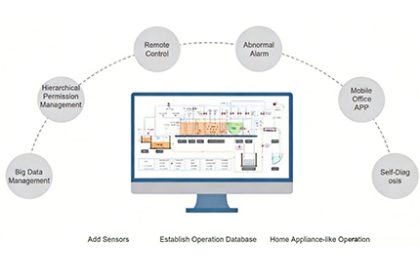
intelligent control system
- Online water quality monitoring (COD, NH₃-N, turbidity)
- Automatic Backwashing Control
- Remote Operations Management
Low-energy consumption operation design
- Gravity Flow Priority Design
- Aerated Zone Control
- The energy consumption is significantly lower than that of traditional MBR systems.
The equipment supports modular expansion design, suitable for water treatment at various scales:
- Single-unit capacity: 600 – 5,000 m³/h
- Parallel multi-module expansion: up to 20,000 m³/d
- Turbidity removal rate: 80% – 99%
- Algae removal rate: ≥ 90%
- COD removal rate: 30% – 70% (depending on influent quality)
Eutrophic Water Purification Equipment Application Scenarios
This equipment is widely used in the following water environment management scenarios:
The mobile eutrophic water purification system, designed around the core principles of “rapid deployment, consistent compliance, ecological restoration, and long-term operation,” delivers a comprehensive upgrade from pollution control to ecosystem rehabilitation, representing a flagship solution in next-generation modular water environment management equipment.
Circulating Water Purification Equipment Introduction
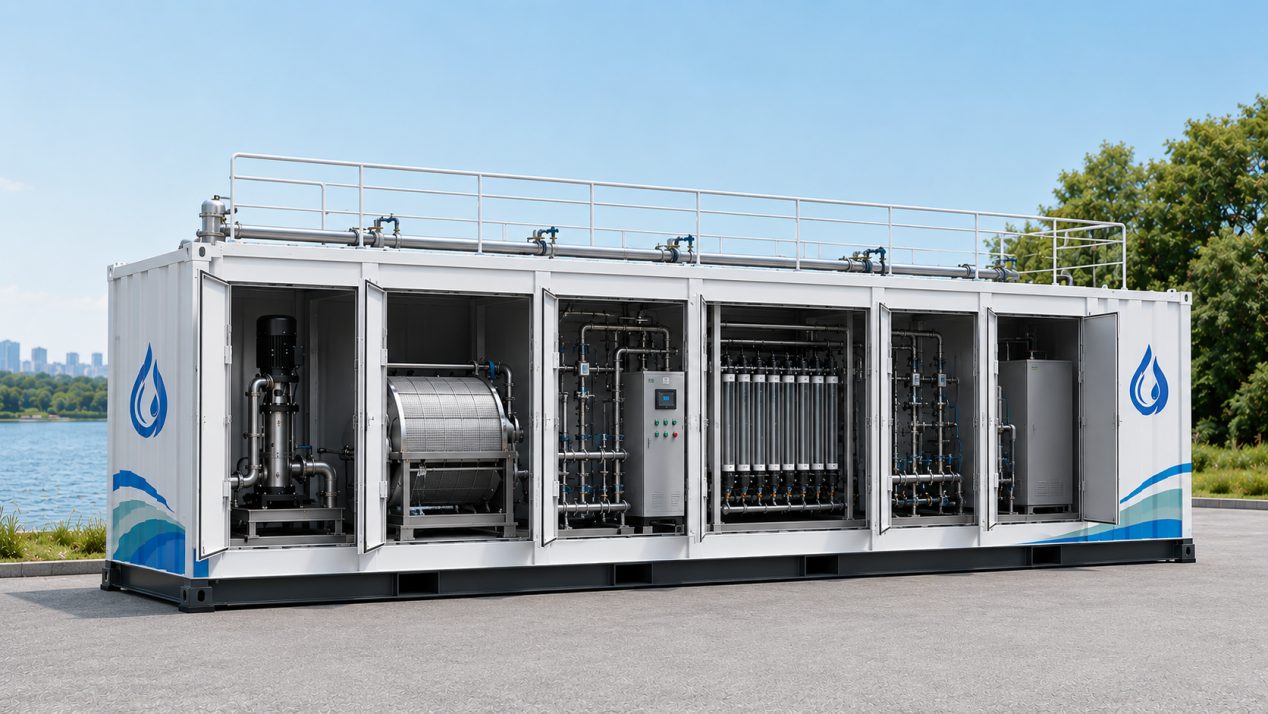
The skid-mounted circulating water purification system is a next-generation modular, integrated water treatment solution specifically designed for landscape water circulation purification, swimming pool filtration, and industrial cooling water systems.
The equipment employs an integrated process approach combining “cyclic filtration + precision purification + stable water quality regulation + intelligent control,” seamlessly integrating filtration and purification, sterilization and algaecide, water quality stabilization, and a circulating delivery system within a modular platform to ensure continuous purification and stable operation of the circulating water system.
The entire system employs industrialized prefabrication and a modular design, featuring:
- Quick Deployment
- Ready-to-use
- Smart Operation
- Energy-efficient and low-consumption
- Long-term stable cycle
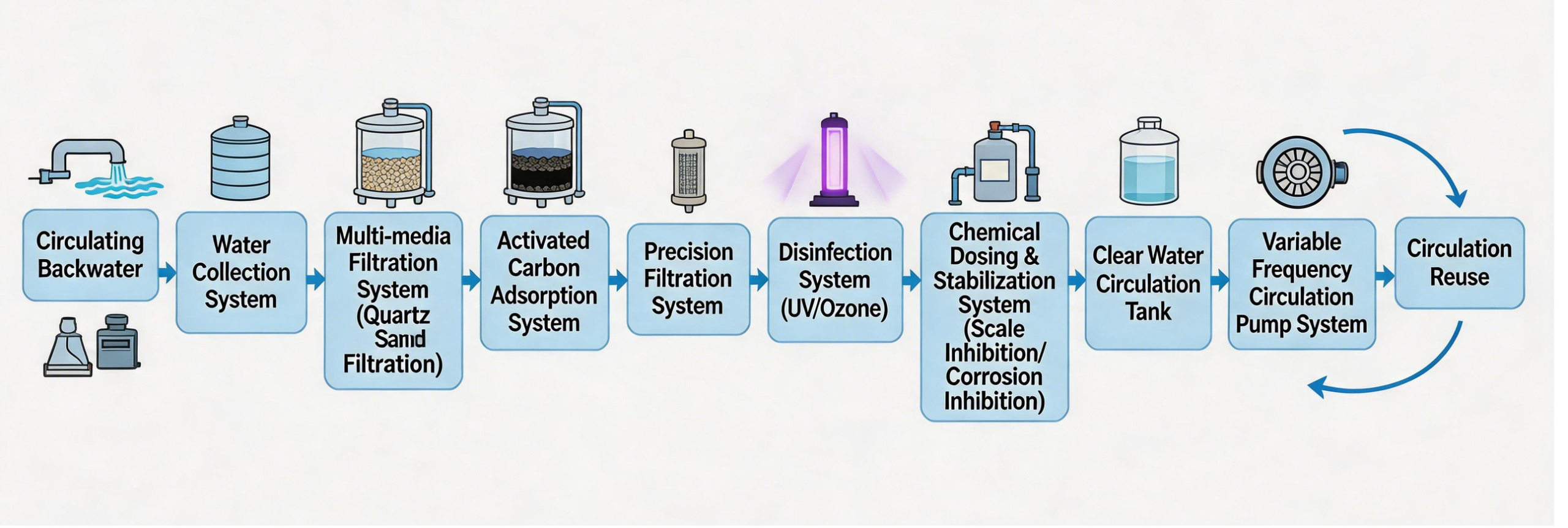
Circulating Water Purification Equipment Details
The equipment integrates “filtration and purification + sterilization and algae elimination + stable circulation + intelligent management” into a single system:
Suspended Particles Removal Function
Efficient Removal:
- suspended matter (SS)
- Colloid impurities
- Floating debris in water bodies
Reduce turbidity in the circulatory system.
Bactericidal and algicidal properties
pass through :
- ultraviolet disinfection
- Ozone sterilization
- Cyclic Antifungal Technology
validation control :
- Algal reproduction
- Microbial proliferation
- Biofilm formation
Maintain stable circulating water conditions.
Water Quality Stability Regulation Function
realize :
- pH stable control
- Antiscaling and anticorrosion
- Electrical conductivity adjustment
- Balanced operation of water quality
Extend the lifespan of system equipment.
Constant Current Cycling Function
Smart Circulation System Supports:
- Constant flow operation
- Auto-adjust cycle period
- Energy-saving frequency conversion control
Ensure the system operates efficiently.
Smart Operations Management Function
support :
- PLC automata
- Online Water Quality Monitoring
- Cloud Platform Remote Management
- Automatic Alarm and Interlocking Protection
To reach unattended operation.

How It Works
(1) Circulating water intake phase
System from:
- Landscape Lake
- swimming pool
- Cooling Circulation System
- Industrial Return Water System
Water is drawn cyclically and enters the purification unit via the collection system.
(2) Pre-treatment filtration stage
Multi-media Filtration System
put to use :
- quartz sand
- anthracite
- Multi-layer filter media structure
dislodge :
- suspended particle
- silt
- Water impurities
Reduce subsequent processing load.
Activated Carbon Adsorption System
For adsorption:
- Odor
- organic contaminant
- Residual chlorine
- Chromogenic substances
Improve the sensory quality of circulating water.
(3) Precision Purification Stage
Precision Filtration System
Further remove:
- Microscopic particles
- colloidal substance
- Microsuspended pollutants
Ensure the stability of the circulatory system.
(4) Sterilization and stabilization phase
The system operates through:
- UV ultraviolet disinfection
- Ozone sterilization
- Automatic Drug Administration System
realize :
- germicide and algicide
- Antiscaling and anticorrosion
- Stability Control of Water Quality
Effective Prevention:
- biological contamination
- Pipeline scaling
- Equipment corrosion
(5) Recycling and Reuse Stage
After entering the circulating water tank, purified water is recirculated to the application points via a variable-frequency circulation pump system, achieving the following:
- Continuous cyclic purification
- Maintain stable flow operation
- Energy-efficient, low-consumption cycle
The equipment can be flexibly configured according to the scale of the circulating water system:
- Single-unit processing capacity: 5 – 500 m³/h
- Supports multi-module parallel expansion
Modular skid-mounted structure
- Factory-preegrated Integration
- Quick lifting at the site
- Ready-to-use
Multi-stage collaborative purification process
- Physical filtration + Chemical regulation + Online control
- Multiple systems operating in coordinated manner
- High stability
Intelligent Circulation Control System
- Automatic Drainage Control
- Automatic Drug Administration Link
- Remote Monitoring Platform
Low-energy consumption operation design
- Gravity Flow Priority Design
- Low-resistance filtration system
- Intelligent Variable Frequency Control Pump Set
Highly adaptive industrial design
- Corrosion-resistant material
- Long-term stable operation
Circulating Water Purification Equipment Application Scenarios
The skid-mounted circulating water purification equipment can be widely applied in:
The skid-mounted circulating water purification system is designed around the core principles of “high-efficiency purification, intelligent circulation, energy-efficient operation, and stable reliability.” Leveraging modular integration and smart control technologies, it delivers a high-quality, highly stable integrated solution for circulating water systems.
We would love to speak with you.
Feel free to reach out using the below details.
Fill out the form below and we will contact you as soon as possible!