Water treatment plant control systems are automated technologies that monitor, control, and optimize water treatment processes through PLC, SCADA, sensors, and remote monitoring platforms. Modern water treatment facilities rely on intelligent automation to maintain stable operation, reduce energy consumption, improve water quality, and minimize manual intervention. From municipal wastewater plants to industrial water treatment systems, advanced control solutions enable operators to manage complex processes such as filtration, disinfection, chemical dosing, and membrane treatment more efficiently. According to industry reports, automated control systems can help reduce operational costs by 10–30% through improved process optimization, predictive maintenance, and reduced downtime. Syneraqua integrates intelligent automation technologies into customized water treatment solutions, helping customers achieve reliable, efficient, and data-driven wastewater and water purification management.
Why Water Treatment Plants Need Advanced Control Systems
Water treatment plant control systems are designed to automatically monitor operating conditions, regulate treatment equipment, and maintain consistent process performance. Traditional water treatment plants often require manual inspection and adjustment, which can lead to delayed responses, unstable operation, and higher labor costs. Advanced automation systems solve these challenges by collecting real-time data and automatically adjusting key parameters.
Common parameters monitored by modern control systems include:
| Parameter | Monitoring Purpose |
|---|---|
| pH value | Chemical dosing control |
| Flow rate | Process balance and capacity management |
| Turbidity | Filtration performance evaluation |
| Dissolved oxygen | Biological treatment optimization |
| Pressure | Pump and membrane protection |
| Water quality indicators | Compliance monitoring |
The integration of PLC, SCADA, and remote monitoring allows operators to identify problems quickly and maintain continuous operation. Reliable automation requires standardized control architectures and industrial communication practices. The industrial automation and control system standards provided by the International Society of Automation (ISA) offer guidance for improving the reliability and safety of automated industrial processes.
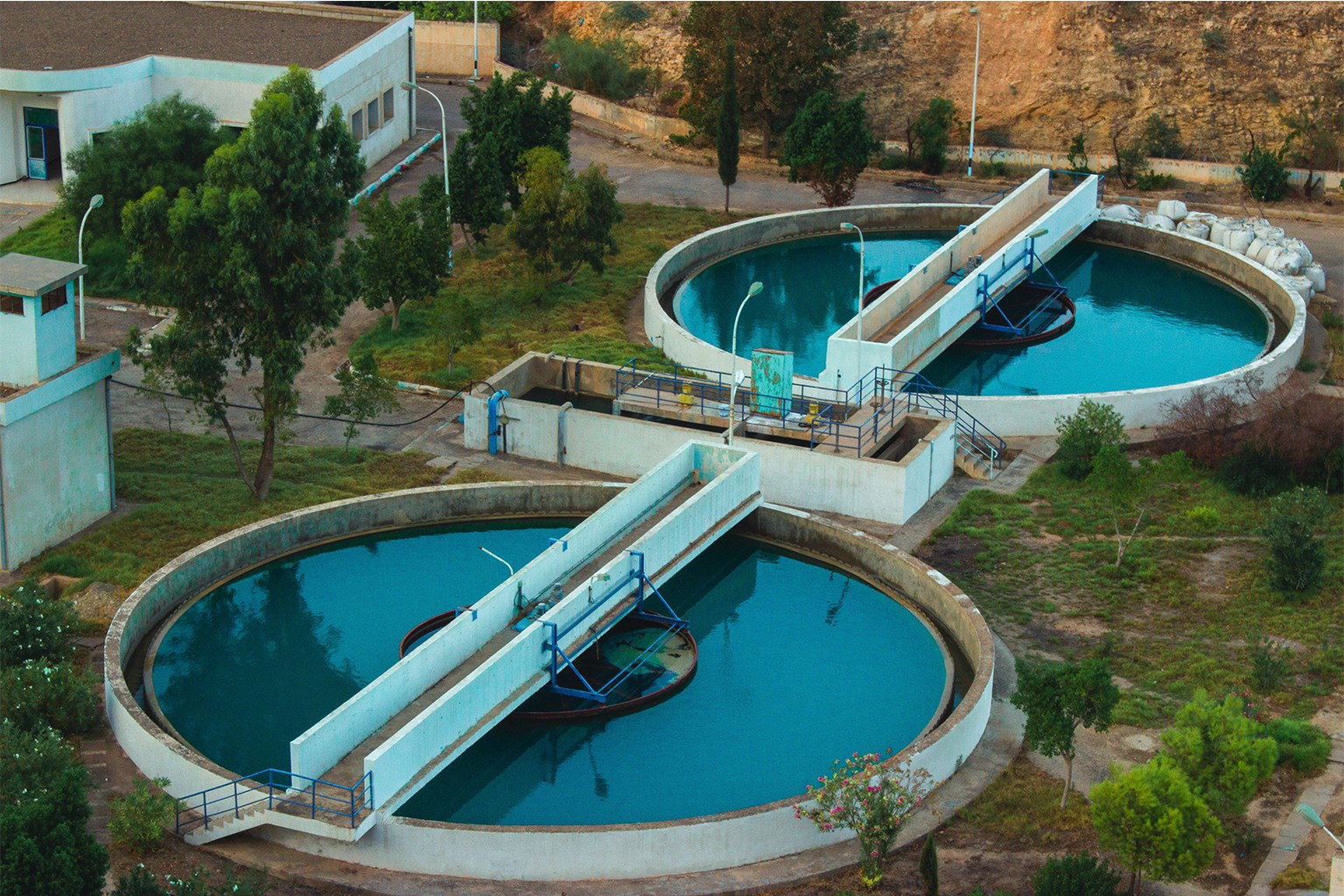
PLC Systems: The Foundation of Water Treatment Automation
A Programmable Logic Controller (PLC) is an industrial computer that automatically controls pumps, valves, sensors, and treatment equipment based on programmed logic. In water treatment plants, PLC systems act as the “control center” responsible for executing real-time commands. They receive signals from field sensors, process data, and send instructions to connected equipment.
Typical PLC applications include:
Pump start and stop control
Automatic valve adjustment
Chemical dosing management
Alarm triggering
Process sequence control
Compared with manual operation, PLC-based automation improves accuracy and reduces human error. Industrial PLC systems are designed for continuous operation and can typically achieve high reliability in harsh environments. Syneraqua applies PLC automation technology to improve the stability and efficiency of customized wastewater treatment projects.
SCADA and Remote Monitoring Improve Water Treatment Efficiency
SCADA (Supervisory Control and Data Acquisition) is a centralized monitoring system that collects real-time operational data and provides visualization, control, and reporting functions. SCADA systems allow operators to view plant performance through dashboards, receive alarms, analyze trends, and remotely adjust operating parameters.
Key benefits include:
| Technology | Main Function | Benefits |
|---|---|---|
| PLC | Equipment control | Fast and reliable automation |
| SCADA | Data monitoring and visualization | Centralized operation management |
| Remote Monitoring | Cloud-based access | Real-time management from anywhere |
Remote monitoring systems are increasingly used in modern water treatment plants because they enable operators to check equipment status, review historical data, and respond quickly to abnormal conditions. Digital monitoring and advanced management technologies are also becoming important tools for improving the performance and reliability of water infrastructure. The water infrastructure technology resources published by the U.S. Environmental Protection Agency provide information related to water system improvement and operational management. The U.S. Environmental Protection Agency (EPA) highlights the importance of digital technologies, monitoring, and operational management in improving water infrastructure performance.
Comparison of PLC, SCADA and Remote Monitoring Systems
Different automation technologies serve different roles in water treatment plant management.
| System | Advantages | Limitations | Best Application |
|---|---|---|---|
| PLC | Fast response, high reliability | Limited data visualization | Equipment-level control |
| SCADA | Real-time monitoring and analysis | Higher system complexity | Complete plant supervision |
| Remote Monitoring | Access from anywhere, easy management | Requires network security | Multi-site operation |
A complete water treatment automation system usually combines all three technologies. PLC provides equipment control, SCADA manages operational visualization, and remote monitoring enables flexible access and decision-making.
Smart Water Treatment Control Systems by Syneraqua
Syneraqua develops customized control solutions based on different water treatment requirements, including industrial wastewater treatment, desalination, and water reuse applications.
The typical automation architecture includes:
Field sensors for real-time data collection
PLC systems for automatic process control
SCADA platforms for monitoring and analysis
Remote communication systems for centralized management
By combining engineering expertise with intelligent control technologies, Syneraqua helps customers improve operational efficiency, reduce maintenance costs, and achieve stable water treatment performance. The development of smart water systems increasingly focuses on data integration, digital monitoring, and intelligent decision-making. The digital water management solutions promoted by the International Water Association (IWA) highlight the importance of digital transformation in modern water management. The company also follows international automation practices and uses reliable monitoring strategies to support long-term system operation.
Conclusion
Water treatment plant control systems based on PLC, SCADA, and remote monitoring technologies are becoming essential for modern water management. These solutions improve process stability, reduce operating costs, and provide operators with real-time visibility into system performance. As water treatment facilities become more complex, intelligent automation will play a key role in improving efficiency, sustainability, and regulatory compliance. Syneraqua provides customized automated water treatment solutions that combine advanced control systems with proven treatment technologies to help industries achieve smarter and more reliable water management.
FAQ
1. What is a water treatment plant control system?
A water treatment plant control system is an automated platform that monitors and controls treatment equipment using technologies such as PLC, SCADA, sensors, and remote monitoring.
2. What is the difference between PLC and SCADA?
PLC controls field equipment such as pumps and valves, while SCADA collects data, displays operating conditions, and provides centralized supervision.
3. Why is remote monitoring important for water treatment plants?
Remote monitoring allows operators to check system status, receive alarms, and manage equipment without being physically present at the plant.
4. Can automation reduce water treatment operating costs?
Yes. Automation can reduce energy consumption, improve chemical dosing accuracy, minimize downtime, and reduce manual labor requirements.
5. What data can SCADA systems monitor?
SCADA systems can monitor parameters such as flow rate, pressure, pH, turbidity, chemical levels, and equipment operating status.
6. Why choose Syneraqua for automated water treatment systems?
Syneraqua provides customized solutions combining water treatment engineering, automation control, and intelligent monitoring technologies to meet different industrial requirements.
References
International Society of Automation (ISA). Industrial Automation and Control Systems Resources.
https://www.isa.org/U.S. Environmental Protection Agency (EPA). Water Infrastructure and Technology Resources.
https://www.epa.gov/water-infrastructureInternational Water Association (IWA). Digital Water and Smart Water Management Resources.
https://www.iwa-network.org/
