Containerized and skid-mounted water treatment systems are two common modular solutions for industrial water, wastewater, municipal supply, and decentralized treatment projects. Both reduce on-site construction and support phased expansion, but they differ in protection, access, cost, transport, and application fit.
The demand for flexible water infrastructure is rising. UNICEF reports that 2.1 billion people lacked safely managed drinking water in 2024, while the U.S. EPA notes that more than one in five U.S. households use septic or decentralized systems. Syneraqua provides modular water and wastewater systems for industrial, municipal, commercial, and remote-site projects. Buyers can explore Water & Wastewater Treatment Systems, Industrial Wastewater Treatment Solutions, and Water Purification Solutions.
What Are Containerized and Skid-Mounted Water Treatment Systems?
Definition: Containerized and skid-mounted water treatment systems are prefabricated modular solutions that integrate treatment equipment, piping, controls, and process units for faster installation and flexible operation.
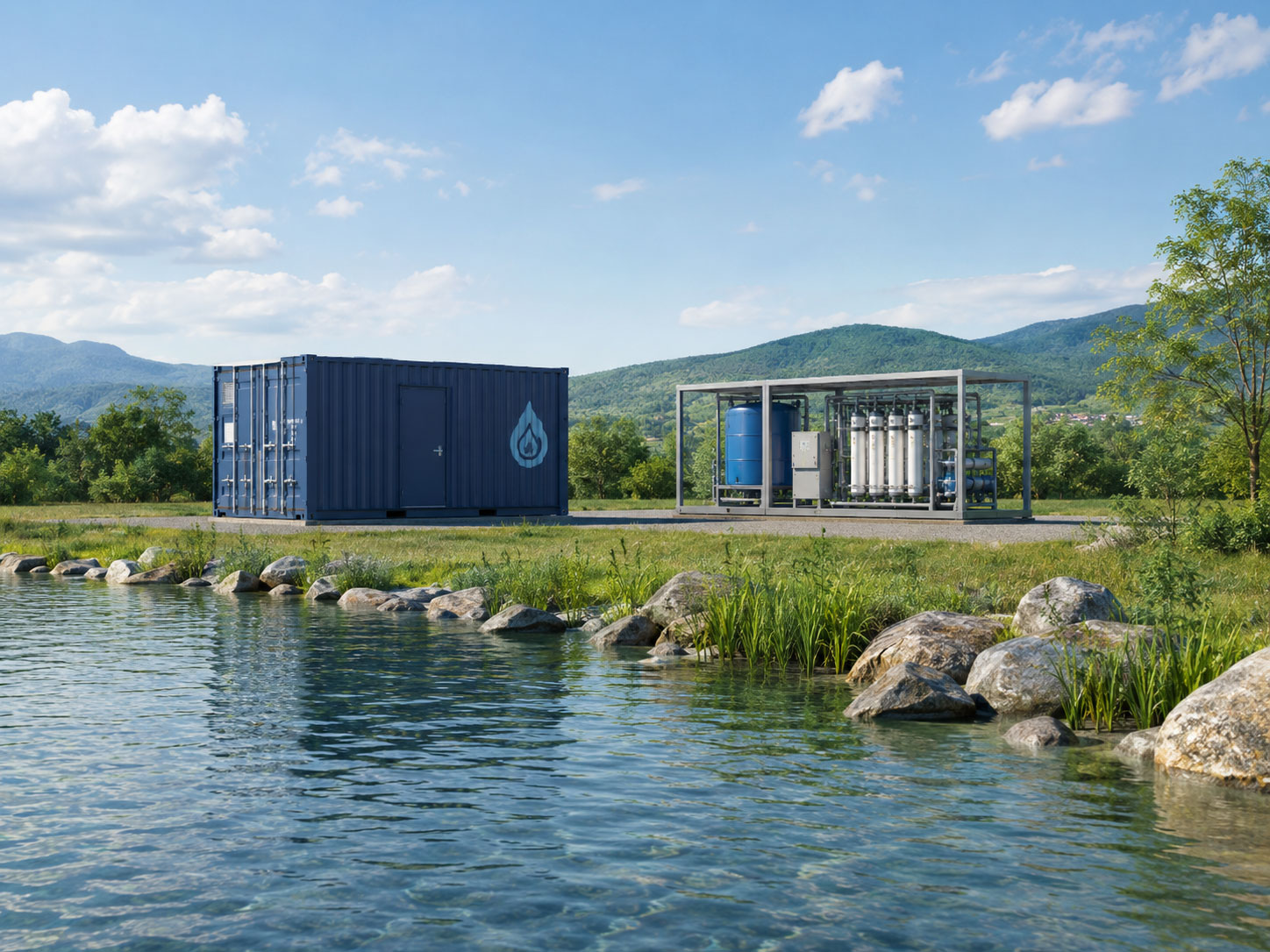
A containerized water treatment system places equipment inside a standard or customized container. It protects equipment from rain, dust, sunlight, wind, and outdoor exposure, and may include ventilation, insulation, HVAC, drainage, dosing space, and controls. According to ISO container dimension standards, Series 1 freight containers use standardized dimensions for global transport.
A skid-mounted system installs equipment on an open steel frame. It is easier to inspect, connect, maintain, and integrate into an existing plant room. In short, containerized systems are better for protected outdoor deployment, while skid-mounted systems are better for accessible indoor installation.
Containerized vs Skid-Mounted Water Treatment Systems: Comparison Table
A containerized vs skid-mounted comparison helps buyers evaluate structure, mobility, installation, maintenance, cost, and application fit before selecting a modular water treatment system.
| Factor | Containerized System | Skid-Mounted System |
|---|---|---|
| Structure | Equipment inside a container | Equipment on an open frame |
| Protection | Strong weather protection | Needs indoor space or shelter |
| Transport | Better for long-distance delivery | Easy to move within a facility |
| Installation | Good for outdoor sites | Good for prepared plant rooms |
| Maintenance | Access depends on layout | Easier inspection |
| Footprint | Compact but size-limited | More flexible layout |
| Cost | Higher enclosure cost | Lower with existing shelter |
| Best use | Remote, outdoor, emergency projects | Factories, parks, upgrades |
If the system will be installed outdoors, shipped overseas, or used in a remote area, containerization is usually safer. If the site already has a building, foundation, utilities, and operators, a skid-mounted system may be more economical and easier to maintain.
Cost, Applications and Selection Guide
The cost and application fit of a modular water treatment system depend on capacity, influent quality, treatment target, installation environment, enclosure needs, automation level, and lifecycle operation cost.
Containerized systems usually cost more because they may require the container body, anti-corrosion treatment, ventilation, insulation, HVAC, access design, and drainage. However, they can reduce civil construction cost when no plant room is available.
Skid-mounted systems may cost less when the site already has shelter, power, drainage, and maintenance space. They are suitable for factories, food processing plants, electronics facilities, hospitals, schools, industrial parks, and water reuse upgrades. Containerized systems are often preferred for mining sites, islands, construction camps, outdoor municipal projects, emergency supply, and mobile wastewater treatment.
Buyers should compare lifecycle value, not only purchase price. Energy, chemicals, membrane replacement, sludge disposal, labor, and downtime all affect real cost. Syneraqua helps buyers choose containerized, skid-mounted, or hybrid systems based on water analysis, flow rate, target standard, site layout, transport needs, and expansion plans.
Conclusion
The best choice between containerized and skid-mounted water treatment systems is the option that delivers the required water quality with the right balance of protection, access, cost, scalability, and site adaptability.
Containerized systems are ideal for outdoor, remote, mobile, and protected applications. Skid-mounted systems are often better for indoor facilities, existing plants, and easy maintenance access. With water quality data, flow rate, treatment target, and site conditions, Syneraqua can recommend a suitable modular water treatment solution.
FAQ
1. What is the main difference between containerized and skid-mounted systems?
A containerized system places equipment inside a container, while a skid-mounted system places equipment on an open frame. The first offers stronger protection; the second offers easier access.
2. Which system is better for outdoor installation?
A containerized system is usually better because the container protects equipment from weather, dust, sunlight, and site exposure.
3. Which system is more cost-effective?
A skid-mounted system may cost less if the site already has a room, foundation, power, and drainage. A containerized system may save cost when it avoids building a plant room.
4. Can both systems treat industrial wastewater?
Yes. Both can use pretreatment, dosing, biological treatment, membrane filtration, advanced oxidation, sludge handling, or disinfection.
5. Can the systems be customized?
Yes. Both can be customized by water quality, capacity, discharge or reuse standard, automation needs, and installation environment.
6. What information is needed before selection?
Buyers should provide water analysis, daily flow rate, target standard, project location, installation space, power conditions, and delivery schedule.
