
Decentralized wastewater treatment is a practical solution for remote communities, work camps, resorts, mining sites, construction camps, Decentralized wastewater treatment is a local treatment approach that collects, treats, and manages wastewater near the point of generation instead of relying on a large centralized sewer and treatment plant.
For remote communities and camps, decentralized systems can treat domestic sewage from toilets, kitchens, showers, laundry areas, canteens, dormitories, and temporary housing. A modular system may include screening, equalization, biological treatment, filtration, disinfection, sludge handling, and automated control.
Compared with traditional sewer infrastructure, decentralized treatment is easier to deploy in areas with long distances, limited land, difficult terrain, seasonal population changes, or temporary project timelines. It can also support water reuse for irrigation, toilet flushing, dust suppression, or non-potable site use when local standards allow.
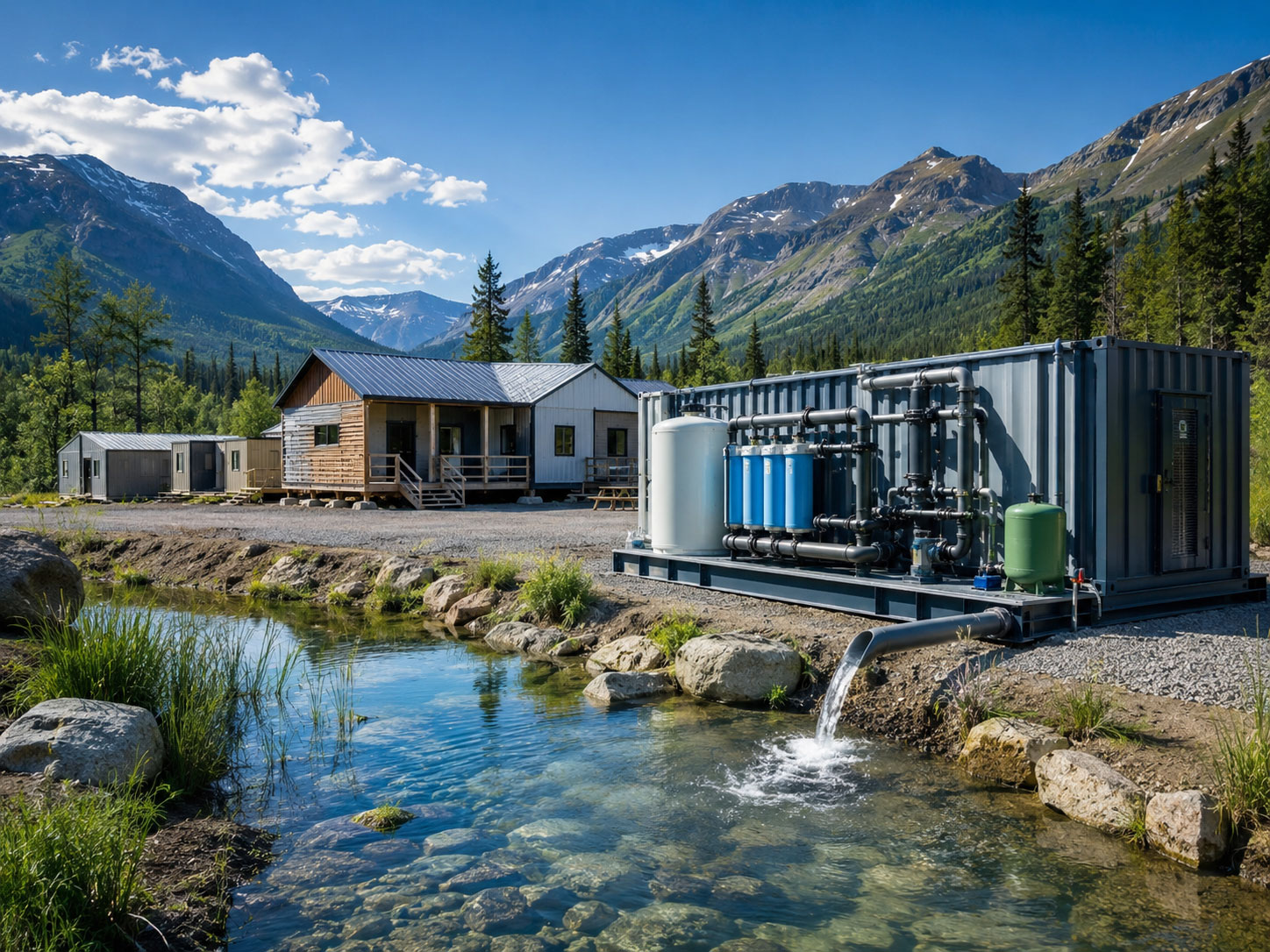
Why Remote Communities and Camps Need Modular Treatment
Remote communities and camps need modular wastewater treatment because they often face limited sewer access, changing population size, harsh site conditions, and strict environmental discharge requirements.
Camps and remote settlements usually have fluctuating wastewater volume. A construction camp may grow quickly during peak project stages and shrink later. A mining site may operate in a remote area for years but still require reliable wastewater compliance. A resort or island community may experience seasonal wastewater peaks.
Modular treatment helps solve these problems through fast installation and phased expansion. Containerized systems are suitable for outdoor or remote environments, while skid-mounted systems are useful when the site already has a plant room or shelter. Syneraqua can design systems according to flow rate, wastewater quality, discharge standard, site layout, and available utilities.
Process Flow and System Options
The process flow of a decentralized wastewater treatment system is the sequence of treatment stages used to remove solids, organic matter, nutrients, pathogens, and odor before discharge or reuse.
A typical process starts with screening to remove large solids. Equalization then balances wastewater flow and pollutant concentration. Biological treatment reduces BOD, COD, and ammonia nitrogen. Filtration removes fine suspended solids, while disinfection reduces microbial risk. Sludge is collected and managed according to site operation plans.
| Project Type | Main Challenge | Suitable Modular Solution |
|---|---|---|
| Remote village | No public sewer access | Compact sewage treatment + disinfection |
| Construction camp | Temporary and changing population | Containerized treatment with expandable capacity |
| Mining camp | Harsh site and long operation cycle | Robust modular system with sludge handling |
| Resort or island | Seasonal flow and reuse demand | Biological treatment + filtration + reuse polishing |
| Military or emergency camp | Fast deployment requirement | Mobile containerized wastewater system |
| Industrial living camp | Mixed domestic and site wastewater | Customized pretreatment + modular biological system |
The best system depends on wastewater source and compliance target. Domestic sewage may only need biological treatment, filtration, and disinfection. Mixed industrial camp wastewater may need oil separation, pH adjustment, or additional pretreatment before biological treatment.
How to Choose the Right Decentralized System
Choosing a decentralized wastewater treatment system requires matching flow rate, wastewater quality, discharge target, installation environment, operation capacity, and future expansion needs.
Before requesting a quotation, buyers should prepare daily flow rate, peak flow, population size, wastewater analysis, discharge or reuse standard, project duration, site location, available footprint, power conditions, and maintenance capability. These details help avoid undersized systems, unstable operation, and unnecessary cost.
Buyers should also consider lifecycle value, not just equipment price. Energy use, chemical consumption, sludge disposal, spare parts, operator workload, and maintenance access all affect long-term cost. Syneraqua supports buyers by reviewing project data, selecting the suitable process, and recommending containerized, skid-mounted, or hybrid modular configurations.
Conclusion
A successful decentralized wastewater treatment system should provide reliable local treatment with the right balance of compliance, scalability, cost control, and site adaptability.
For remote communities and camps, decentralized wastewater treatment reduces dependence on centralized sewer infrastructure and supports safer, cleaner site operation. With accurate flow data, wastewater quality, site conditions, and discharge targets, Syneraqua can recommend a modular wastewater treatment system suitable for remote, temporary, and decentralized projects.
FAQ
1. What is decentralized wastewater treatment?
It is a local wastewater treatment approach that treats sewage close to where it is generated, instead of sending it to a distant centralized treatment plant.
2. Is it suitable for remote camps?
Yes. It is suitable for construction camps, mining camps, military camps, emergency camps, and remote worker housing where public sewer access is unavailable.
3. Can treated wastewater be reused?
Yes, depending on local standards. Treated water may be reused for irrigation, toilet flushing, dust suppression, or other non-potable applications after proper polishing and disinfection.
4. What affects system capacity?
Capacity depends on population size, water consumption, peak flow, operating hours, seasonal changes, and wastewater source.
5. Should I choose containerized or skid-mounted design?
Choose containerized systems for outdoor, remote, mobile, or temporary projects. Choose skid-mounted systems when the site has a building, shelter, and easy maintenance access.
6. What information is needed before quotation?
Buyers should provide flow rate, wastewater analysis, discharge or reuse standard, population size, site layout, power conditions, project duration, and installation environment.
